for Pharma Sponsors & Contract Research Organizations


Blood-based Neurodegenerative Disease Assays (RUO)
| BD-pTau 217 | IFU | DOWNLOAD PDF |
| p-Tau217 | IFU | DOWNLOAD PDF |
| GFAP | IFU | DOWNLOAD PDF |
| NfL | IFU | DOWNLOAD PDF |
| APOE ε4 | IFU | DOWNLOAD PDF |
| β-Amyloid 1-42 | IFU | DOWNLOAD PDF |
| BD-Tau | IFU | DOWNLOAD PDF |
Research Use Only Assays in Development
| MTBR-Tau (CSF-based) |
| TDP-43 |
| p‑Tau 205 |

Assay has been granted Breakthrough Device Designation (BDD) from the U.S. FDA
| p-Tau217/ß-AmyIoid 1-42 Plasma Ratio* |
For CROs seeking a testing services partner, the easiest way to ACCESS NeuroABC is through Navigate BioPharma Services, a CLIA certified lab with extensive experience with biomarker endpoints.

How the collaboration works:
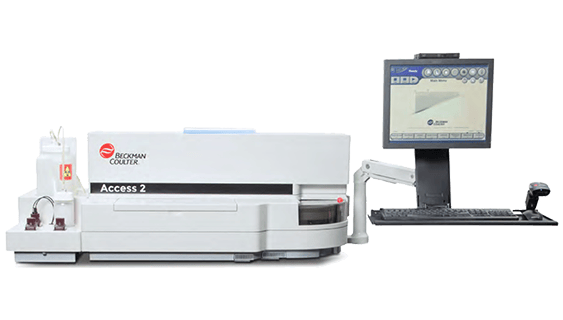
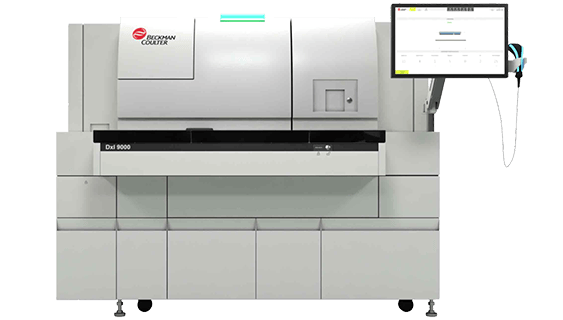
Navigate BioPharma Services uses Beckman Coulter Diagnostics DxI 9000 Analyzer and Access neurodegenerative disease (NDD) RUO assays, providing you with a viable system to conduct preclinical and clinical NDD clinical trial research.

How it transforms your research:
It frees you from the limitations of expensive cognitive assessments and invasive procedures such as CSF collection or amyloid PET imaging. You get immediate access to highly sensitive and specific blood-based biomarkers to detect amyloid and tau pathology, creating the potential for preclinical and clinical trial research.

Let’s look at one example of the potential economic advantages of blood p-Tau217 prescreening as part of the recruitment of asymptomatic individuals for clinical drug trials.
Required for trial:
1,000 subjects who are Aβ-positive on PET
Assume 20% of screened participants are Aβ-positive on PET

PET scan only5,000 participants screened Cost per PET scan:$3,000 |
 |
|
Total screening cost:
$15 million
(5,000 x $3,000)
|
Blood test + PET5,000 participants screened
Cost per (with positive plasma |
|
|
Total screening cost:
$6.25 million
(5,000 x $50) + (2,000 x $3,000)
|
THE TECHNOLOGY TRANSFER IMPERATIVE

Why is making a strategic decision regarding the diagnostic platform used for clinical trials increasingly critical for pharmaceutical companies on the front lines of developing novel Alzheimer's Disease (AD) therapeutics?
The blood-based biomarkers included in the NeuroABC pipeline are crucial for identifying the right patients for clinical trials, especially those individuals in the early, pre-symptomatic, or prodromal stages of AD where interventions are expected to be most effective.
By using an IVD quality platform during screening and enrollment, forward-looking pharmaceutical companies will usher in an era of precision medicine with:


Get Beckman Coulter Neurodegenerative items of interest delivered to your inbox.

Regulatory agencies, including the FDA, are increasingly focused on the performance and clinical utility of diagnostics, particularly when they are intended to guide the use of a therapeutic (e.g., companion diagnostics). Leveraging the same platform across all phases of trials3:

See what’s possible from a regulatory approval and co-development standpoint when you have ACCESS to the NeuroABC blood-based biomarker pipeline and a Beckman Coulter diagnostic platform across all trial phases.

Q: Want a more cohesive and robust data package that you can submit for IVD clearance?
A: A common platform seamlessly links the performance of your diagnostic with the clinical outcomes of the therapeutic.4
Q: Ready to simplify the regulatory narrative and potentially expedite the review process for both your drug and future diagnostic?
A: Demonstrating the diagnostic's performance during drug trials on the intended IVD platform already available in clinical settings is compelling evidence for its clinical validity.5
Q: Looking for a higher degree of assurance that your diagnostic platform will produce reliable and valid data for the clinical trial?
A: Using previously approved analyzers that have undergone rigorous evaluation allows you to demonstrate adherence to established safety and efficacy standards.6An ACCESS Biomarker Collection collaboration with Beckman Coulter establishes a partnership that can span from early clinical feasibility to widespread commercial availability and scalability.
Because implementing an IVD-forward clinical trials strategy requires:




Conducting clinical trial research using an RUO assay on an IVD platform enables a head-to-head data comparison between the data collected during clinical trials and the data generated from routine clinical testing once the diagnostic and drug are on the market.
Platform consistency facilitates the collection and analysis of real-world data, which is increasingly important for understanding long-term treatment effectiveness, safety, and healthcare applications in diverse patient populations outside the controlled clinical trial setting.When a novel AD therapeutic is approved, its successful uptake depends not only on its efficacy but also on the accessibility and familiarity of any associated diagnostics. When physicians and clinical laboratories are already familiar with the diagnostic platform and its performance characteristics from pivotal clinical trials, the path to integrating the assay into routine clinical practice is much smoother,3,4 reducing the need for extensive post-launch education on a new, unfamiliar platform. Further, it instills confidence in the diagnostic results among clinicians and patients and builds momentum for both the drug and the diagnostic, leading to potentially faster market penetration and broader patient access.


PR Newswire®
“Biogen, Beckman Coulter and Fujirebio to Collaborate on Blood-Based Biomarkers and Test for Tau Pathology in Alzheimer’s Disease”
Read article
Global Alzheimer's Platform Foundation
“Beckman Coulter Diagnostics Joins the Transformative Bio-Hermes-002 Study as New Partner”
Read article
PR Newswire®
“Beckman Coulter Receives FDA Breakthrough Device Designation for Alzheimer's Disease Blood Test”
Read article
ALZpath
“ALZpath Signs Licensing Agreement with Beckman Coulter Diagnostics to Provide Proprietary pTau217 Antibody to Develop a Diagnostic Blood Test for Alzheimer’s Disease”
Read article
Aligning trial platforms with future diagnostic solutions puts the necessary tools in place to identify the right patients at the right time.
Turn scientific breakthroughs into tangible patient benefits with a powerful accelerator that: